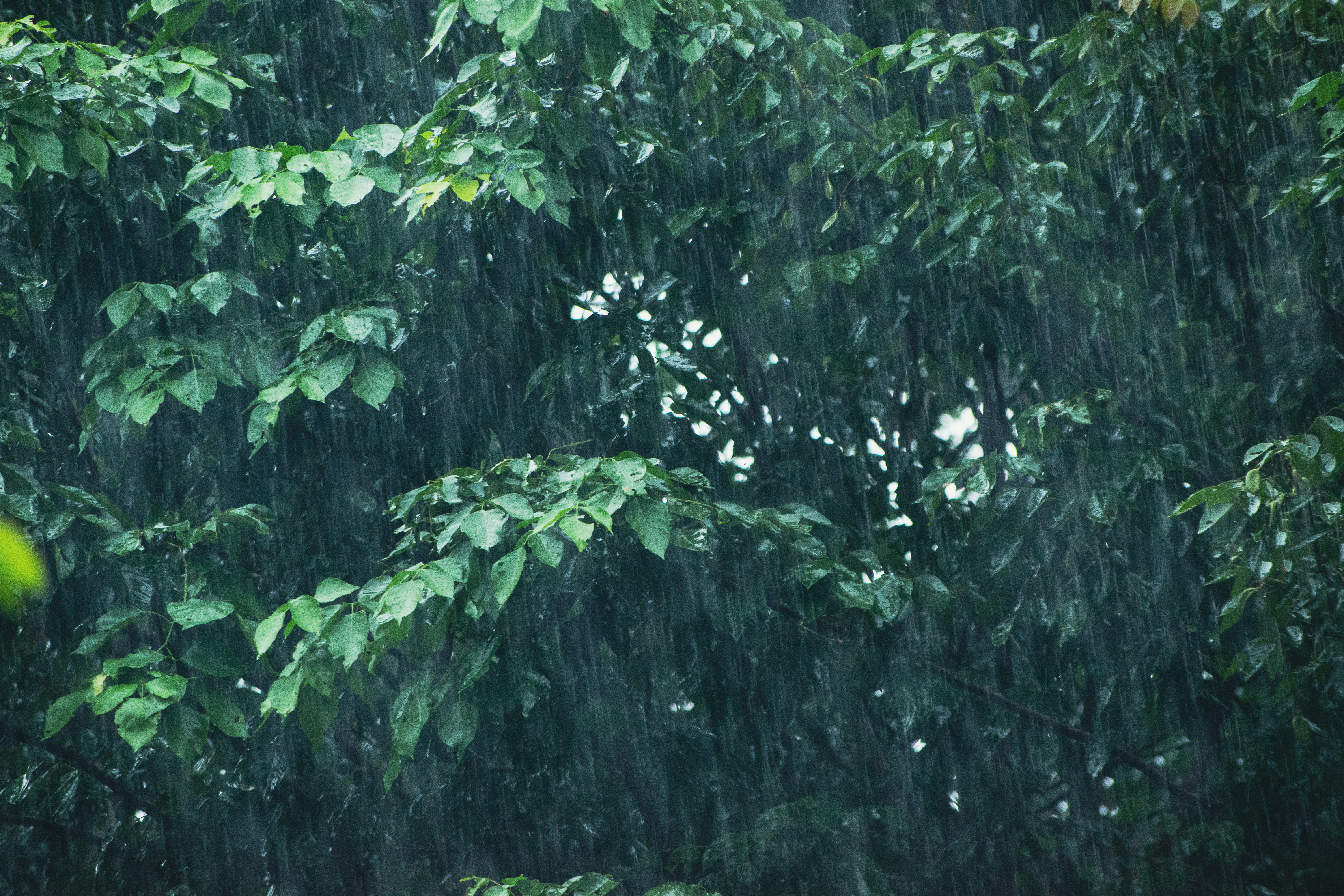
The Essence of Rain: Nature's Liquid Gift
Few phenomena are as universally recognized and profoundly impactful as rain. More than just water falling from the sky, rain is a fundamental driver of life on Earth, a sculptor of landscapes, and the indispensable architect of our planet's water cycle. It is the liquid precipitation that descends from clouds, typically in the form of water drops with diameters larger than 0.5 mm, a seemingly simple event that belies a complex atmospheric ballet crucial for every living organism.
Understanding rain means appreciating its intricate journey. It begins with the invisible, as water vapor in the atmosphere ascends, cools, and condenses around microscopic aerosol particles known as condensation nuclei. These tiny droplets then grow by colliding and merging through processes like coalescence or riming, until they become heavy enough to overcome atmospheric updrafts and fall earthward under gravity. This continuous, delicate process ensures the constant replenishment of the Earth's vital water resources, a cycle without which life as we know it could not exist.
Rain's Central Role in the Global Hydrological Cycle
At the heart of Earth's climate system lies the hydrological cycle, and rain is its primary workhorse. This ceaseless global process involves the evaporation of water from oceans, lakes, and land surfaces, its transport through the atmosphere, condensation into clouds, and finally, its return to the Earth's surface as precipitation. Rain is the most significant form of this return, acting as the planet's circulatory system.
Without rain, the hydrological cycle would break down. It is rain that:
- Replenishes Surface Water Supplies: Filling rivers, lakes, and reservoirs, which are critical sources for drinking water, agriculture, and industry.
- Recharges Groundwater Aquifers: Seeping into the ground, rain replenishes vast underground reservoirs that sustain wells and springs, providing a slow-release water supply even during dry periods.
- Drives River Systems: The flow of countless rivers worldwide is directly sustained by rainfall, transporting nutrients, shaping valleys, and supporting diverse aquatic ecosystems.
- Maintains Soil Moisture: Essential for plant growth and agricultural productivity, preventing desertification and maintaining fertile lands.
The sheer volume of water transferred by rain is staggering, constantly redistributing this precious resource across continents and oceans, ensuring its availability where and when it's needed most.
Nurturing Life: Rain and Earth's Diverse Ecosystems
The profound connection between rain and life is undeniable. Every ecosystem, from the sprawling savannas to the dense rainforests, depends on specific rainfall patterns for its survival and biodiversity. Rain is the lifeblood that nourishes plants, sustains animal habitats, and dictates the very structure of biological communities.
Consider the stark contrasts across the globe:
- Tropical Rainforests: Thriving under annual deluges often exceeding 10 meters, these biodiversity hotspots are home to an unparalleled array of species, all adapted to and reliant on consistent heavy rainfall. The rain here washes nutrients into the soil, supports the dense canopy, and creates the humid conditions necessary for countless fungi and insects.
- Temperate Forests: Experiencing seasonal rainfall, these forests see cycles of growth and dormancy, with rain driving the vibrant spring bloom and supporting lush summer foliage.
- Deserts: Even in the most arid regions, receiving less than 25 mm annually, the sporadic but crucial rain events trigger bursts of life, allowing drought-resistant plants to flower rapidly and providing vital moisture for adapted animal species.
Beyond natural ecosystems, rain is the cornerstone of global agriculture. It irrigates crops, supports livestock, and ensures food security for billions. A delicate balance is required; too little rain leads to crop failure and famine, while excessively heavy rainfall can devastate harvests through flooding and soil erosion. Therefore, understanding and predicting The Science Behind Rain: From Vapor to Drop is not just an academic pursuit but a critical aspect of managing our planet's resources.
The Science Behind the Downpour: Formation from Cloud to Ground
The journey of a raindrop from an invisible atmospheric gas to a palpable splash on the ground is a marvel of physics and meteorology. This process hinges on a critical atmospheric condition known as saturation.
Understanding Atmospheric Saturation and Cloud Formation
Atmospheric saturation occurs when the air contains the maximum amount of water vapor possible at a given temperature and pressure. At this point, the relative humidity reaches 100%. The temperature at which this saturation is achieved upon cooling is known as the dew point temperature. Saturation is not merely a condition but a prerequisite for cloud formation; any excess water vapor beyond this point cannot remain as gas and must condense into liquid droplets or ice crystals.
Air masses typically reach saturation through several key cooling mechanisms:
- Adiabatic Expansion: As air parcels rise (due to processes like orographic lift over mountains or convective ascent from heating), they expand due to lower atmospheric pressure and cool. This cooling, without heat exchange with the surroundings, leads to saturation.
- Radiative Cooling: At night, the Earth's surface radiates heat away, cooling the air directly above it and potentially bringing it to its dew point.
- Mixing of Air Masses: When warm, moist air mixes with cooler air, the combined air mass can become saturated, leading to condensation.
Once saturated, air can become conditionally unstable, promoting further vertical motion and cloud growth. However, condensation doesn't happen spontaneously in pure air. This is where Unlocking Rain: How Atmospheric Saturation Creates Clouds becomes vital: tiny airborne particles, known as Cloud Condensation Nuclei (CCN), are essential. These hygroscopic aerosols (like sulfates from volcanic eruptions, sea salt from ocean spray, or dust) act as surfaces for water vapor to condense upon, lowering the energy barrier for droplet formation. Without these nuclei, relative humidity would need to reach over 400% for water to condense, a virtually impossible scenario in the natural atmosphere. With CCN, droplets can form at humidities only slightly above 100%, leading to the formation of visible clouds composed of countless microscopic water droplets.
From Cloud Droplets to Raindrops
Once cloud droplets form (typically 5-10 micrometers in radius), they are too small to fall as rain. The transformation into raindrops generally requires two main processes:
- Coalescence: In warmer clouds, larger droplets fall faster, colliding with and absorbing smaller droplets. This process of collision and merging (coalescence) causes the drops to grow rapidly.
- Riming and Aggregation: In colder clouds, ice crystals can form. These ice crystals grow by collecting supercooled water droplets (riming) or by colliding and sticking together (aggregation), forming snowflakes. If these snowflakes fall through a layer of warm air near the ground, they melt and become raindrops.
When these growing drops become heavy enough to overcome the upward drag of atmospheric updrafts, they begin their descent to Earth, becoming the rain we experience.
Navigating Rain's Extremes: From Deluges to Droughts
While rain is undeniably a blessing, its distribution and intensity can swing wildly, bringing both vital sustenance and significant challenges. Global rainfall patterns are influenced by complex interactions of atmospheric circulation, topography, and seasonal temperature variations, leading to vastly diverse distributions.
The Perils of Too Much Rain: Flooding and Erosion
Intense or prolonged rain events, often associated with convective showers or large-scale storm systems, can overwhelm natural and urban drainage systems. This leads to:
- Flooding: Rivers burst their banks, urban areas become submerged, infrastructure is damaged, and lives are tragically lost. Floodwaters can contaminate water supplies and spread disease.
- Erosion: Heavy rainfall dislodges soil particles, washing away fertile topsoil vital for agriculture and leading to landslides, especially on deforested slopes. This can degrade land, pollute waterways with sediment, and destroy habitats.
Practical Tip: Communities can mitigate flood risks by improving drainage systems, creating permeable urban surfaces (rain gardens, green roofs), restoring natural floodplains, and implementing robust early warning systems.
The Scourge of Too Little Rain: Drought and Scarcity
Conversely, prolonged periods of significantly reduced rainfall result in droughts, which have far-reaching and devastating consequences:
- Water Scarcity: Depletion of surface and groundwater supplies impacts drinking water availability, industrial processes, and sanitation.
- Agricultural Failure: Crops wither, livestock suffer, leading to food shortages, economic losses, and humanitarian crises.
- Increased Wildfire Risk: Dry vegetation becomes highly flammable, increasing the frequency and intensity of wildfires, which destroy ecosystems and threaten human settlements.
- Desertification: Persistent drought can lead to the degradation of fertile land into desert-like conditions, further reducing agricultural potential and biodiversity.
Practical Tip: Strategies to combat drought include implementing water conservation measures (efficient irrigation, leak reduction), investing in drought-resistant crops, developing sustainable water management plans, and exploring alternative water sources like desalination.
Conclusion
From its microscopic origins in atmospheric vapor to its profound impact on global ecosystems and human civilization, rain embodies a force of nature that is both life-sustaining and, at times, devastating. It is the core mechanism of the hydrological cycle, endlessly renewing our planet's freshwater reserves and fostering the biodiversity that defines Earth. While its patterns can be unpredictable and its extremes challenging, understanding the vital role of rain allows us to appreciate its indispensable contribution to life and to develop strategies for living sustainably with this essential element.